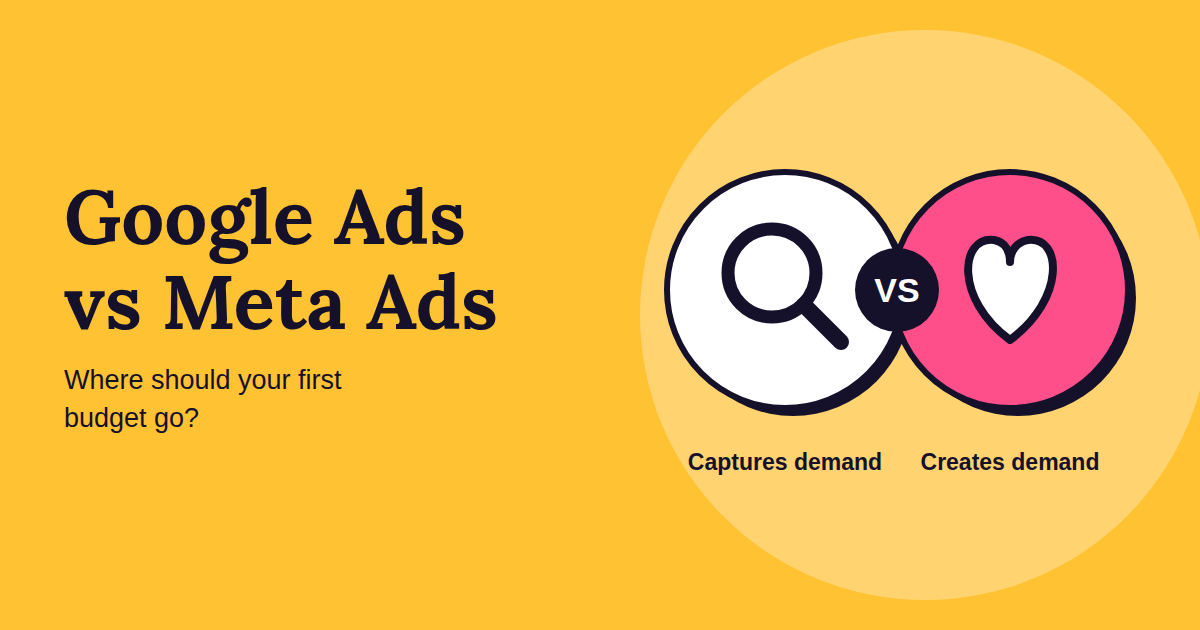
Google Ads captures existing demand; Meta Ads creates it. Here’s how to decide where your first marketing budget should go.
Primary keyword: Google Ads vs Meta Ads
The question isn’t which platform is better. It’s which one fits how your customers buy.
Google Ads: capturing intent.
People search when they already want something. Search campaigns put you in front of them at that moment.
• Best for: services, high-consideration purchases, local businesses, and products people actively search for.
• Watch out for: expensive clicks in competitive categories.
Meta Ads: creating demand.
People scroll to be entertained, not to buy. Good creative interrupts that scroll and builds interest.
• Best for: visual products, impulse or lifestyle purchases, new brands, and offers that need explaining.
• Watch out for: creative fatigue, so you’ll need a steady supply of new ads.
Quick decision rules:
• Customers already search for your product → start with Google Search.
• Nobody knows your category exists yet → start with Meta.
• Sales cycle is long → use Meta or LinkedIn to nurture, Google to close.
• Small budget → pick one platform and get it profitable before adding a second.
Setup basics for both
1. Track the real business outcome (purchase, qualified lead), not just clicks.
2. Give campaigns 2-4 weeks and enough conversions before judging results.
3. Test one variable at a time: audience, offer, or creative.
4. Set up retargeting to bring back site visitors who didn’t convert.
KPIs: cost per acquisition, return on ad spend, conversion rate, and customer lifetime value. Use lifetime value to decide how much you can afford to pay for a customer.
Takeaway: Start where your customer’s intent already exists, prove profitability, then expand.
Leave a Reply